


INSTRUMENTS & SOUNDS
POLYINSTRUMENTAL FRAMEWORK
Interconnected Sound Layers
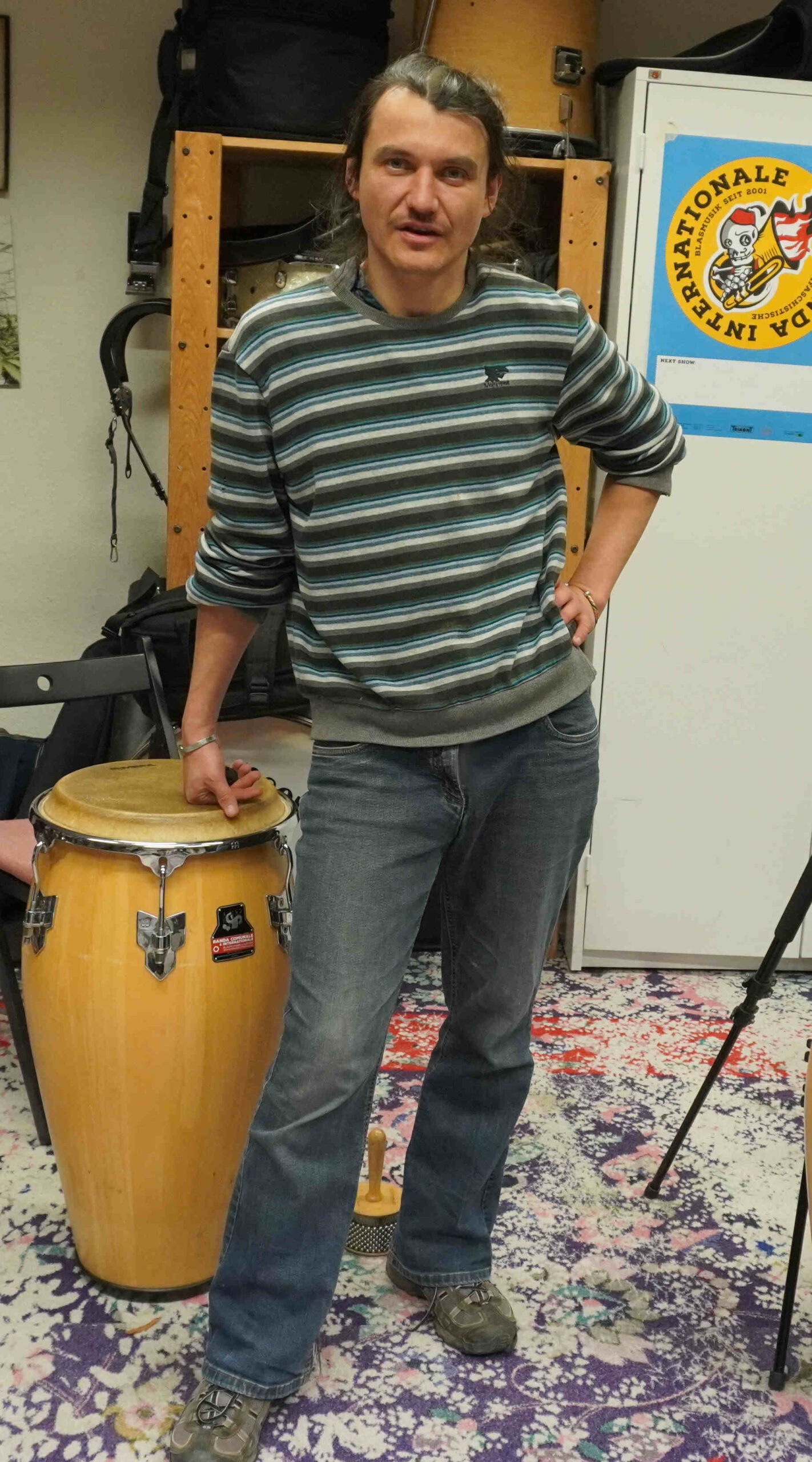
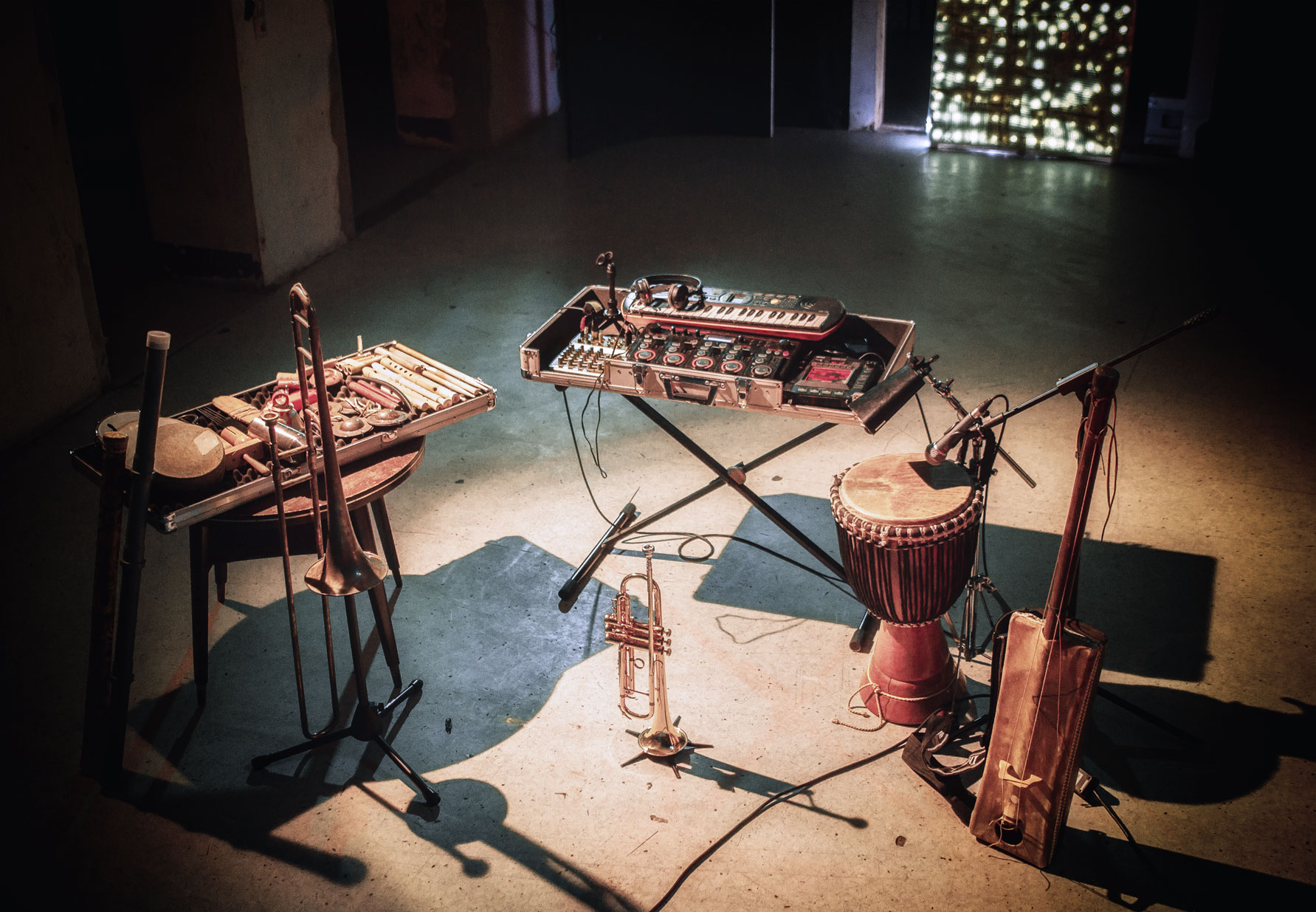
My work is based on a polyinstrumental system rather than a fixed setup. Voice, percussion, strings, wind instruments and live electronics are treated as interconnected sound layers that can be combined, transformed and reconfigured in real time.
Global musical traditions and playing techniques meet contemporary electronic aesthetics. Rhythmic, melodic and textural elements are shaped through live looping and improvisation, allowing the music to move fluidly between physical groove, spacious soundscapes and club-oriented intensity.
This framework forms the basis for my performances, workshops and embodied practices, adapting to each space, audience and moment.
PULSE
Rhythm & Energy
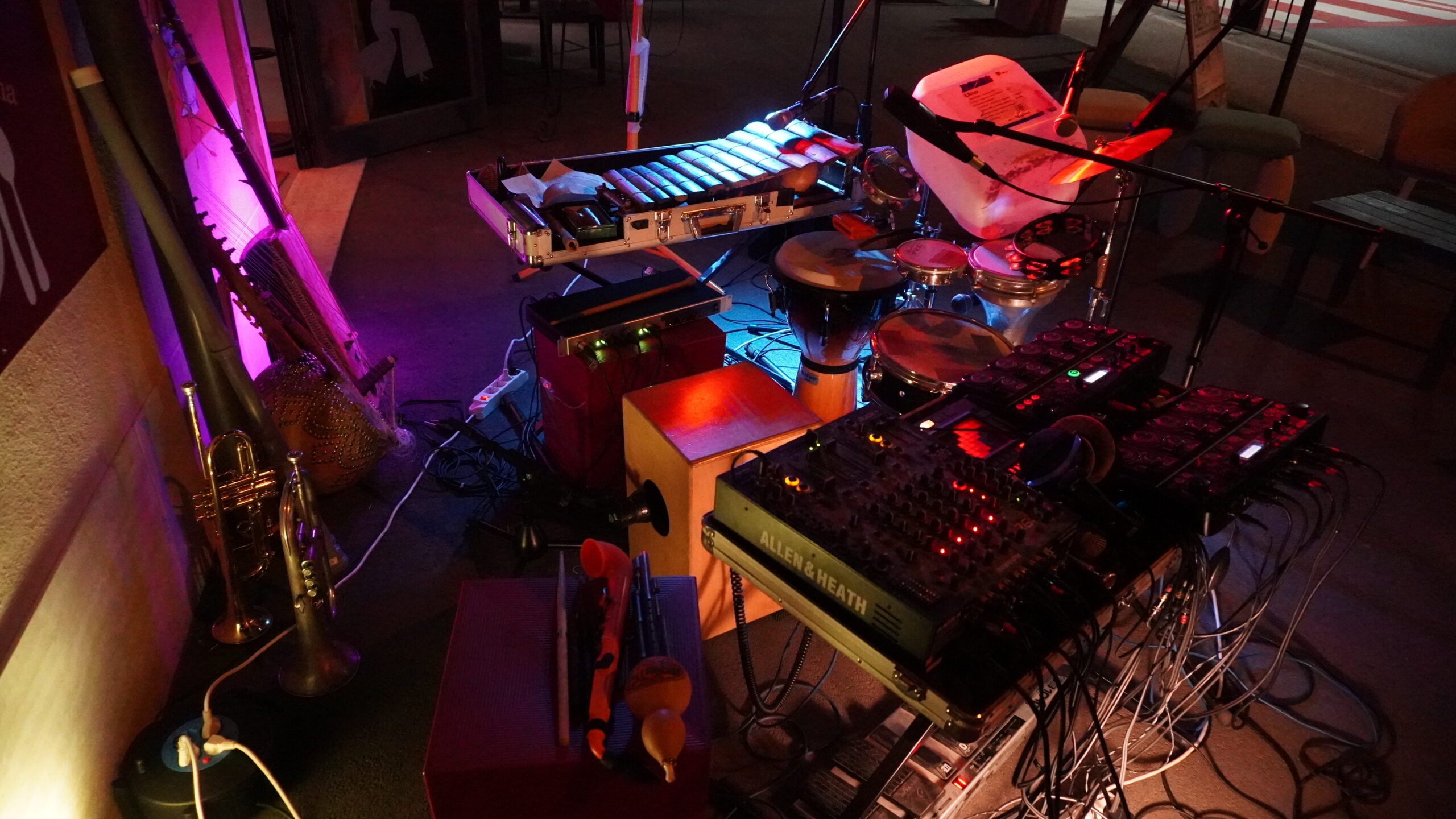
Pulse is the physical foundation of my live sets. Using percussion instruments such as cajón, darbuka, djembe, talking drum, krakebs, shakers and body percussion, I build polyrhythmic grooves that connect movement, timing and collective drive.
These rhythmic structures are rooted in global traditions while being shaped by an urban, club-oriented sensibility. The pulse creates momentum and grounding at the same time — forming the rhythmic engine on which all other sonic layers are built.
Listen: Pulse loop
VOICE
Foundation, Expression & Texture
The voice is my most versatile instrument and the connective tissue between all layers. Through beatbox, breath-based rhythm, vocal timbres and live processing, it can generate pulse, melodic fragments and detailed textures.
Sometimes it stays raw and close, sometimes it transforms into electronic sound — turning a human signal into an evolving sonic layer. In performance, voice helps to shape transitions, dynamics and the improvisational character of the set.
Listen: Voice, overtones & textures
BASS & BODY
Strings & Drones
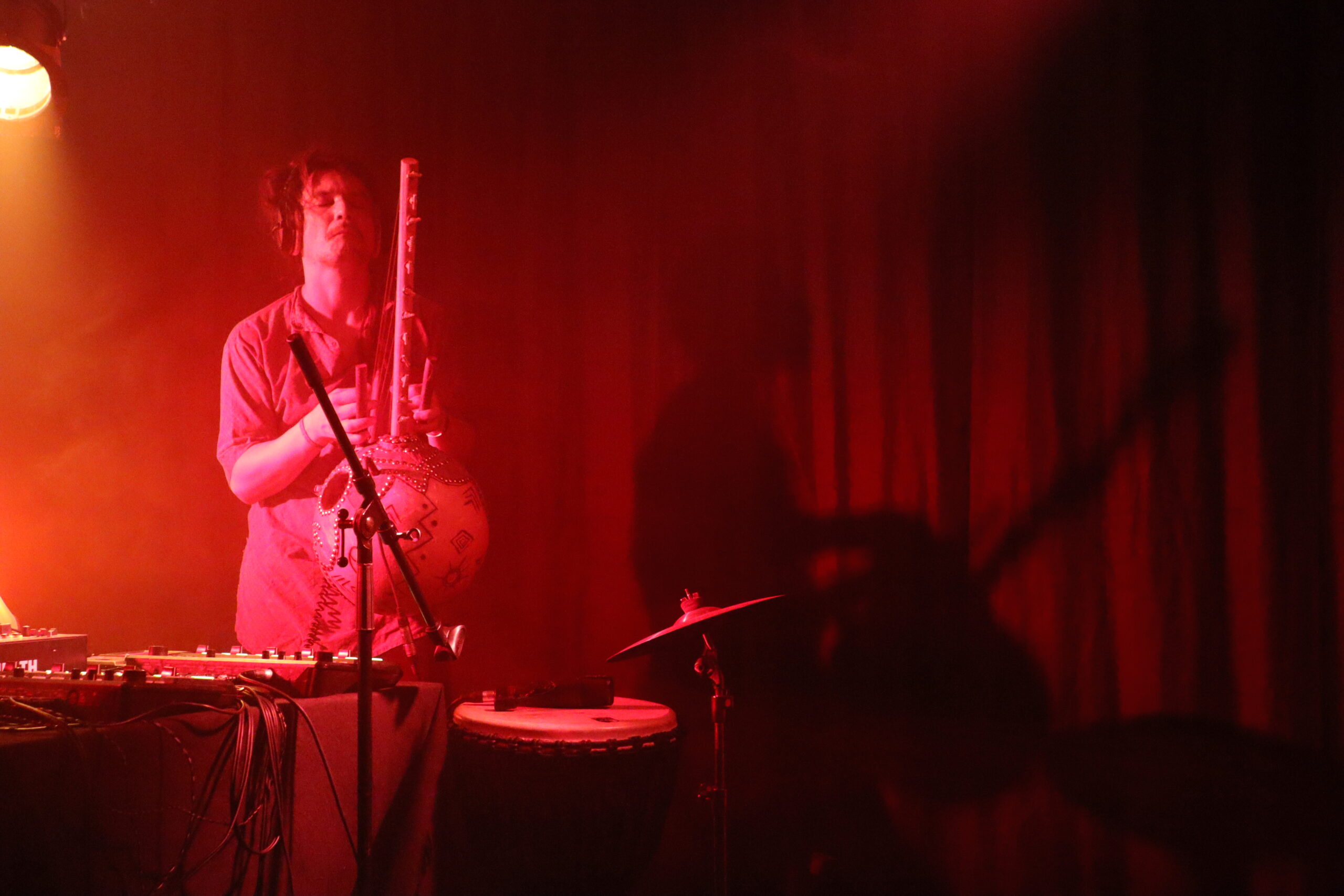
Strings and drones create depth, weight and a physical sense of grounding in my live sets. Instruments such as guimbri, ngoni, kobyz and krar contribute bass lines, repetitive patterns and sustained tones that hold the space.
These layers connect rhythmic drive with trance-like continuity — forming the low-frequency backbone that other elements can lean into. Depending on the moment, they can feel earthy and percussive, or spacious and meditative.
Listen: Strings & drone layer
MELODY & COLOUR
Winds & Reeds
Wind and reed instruments introduce melodic direction, phrasing and tonal colour into my live sets. I work with a range of instruments such as trumpet, saxophone, flutes and overtone-based wind techniques, choosing each one in relation to the desired atmosphere and musical context.
Rather than serving a fixed stylistic role, these instruments are used for specific emotional and spatial qualities — from lyrical and open melodic lines to raw, breathy textures or sustained tones that blend into the overall sound field.
Listen: Wind instruments — meditative layer
ELECTRONICS & LOOPING
The Engine
Electronics form the connective and structural layer of my live system. I work with loop stations, samplers and real-time effects that capture, layer and transform acoustic sounds while performing.
Voice, percussion, strings and wind instruments are routed into loop-based processes where patterns, drones and melodic fragments can be repeated, modified or released again. Effects such as filtering, delays and spatial processing shape form, density and movement over time.
All electronic layers are generated live, without pre-produced material. This keeps the performance flexible, allowing structures to expand, dissolve or shift direction in response to space, audience and moment.
Listen: Meditative electronic layer
INTEGRATION
How It All Comes Together
In performance, pulse, voice, bass, melody and electronics are not separate layers, but interdependent elements of a single system. Each sound influences the others, shaping form, intensity and direction in real time.
Live looping allows this system to grow organically: patterns repeat, shift and dissolve, while new layers emerge through improvisation and response to the moment. What unfolds is not a fixed composition, but a dynamic process guided by listening, movement and presence.
Examples of different performance contexts:
Club / Dance Context
Outdoor Festival
Sound Meditation
PEDAGOGY
What I Teach Through These Instruments
The instruments and sound processes used in my performances are also central to my pedagogical work. Rather than focusing on isolated techniques, I approach music as an embodied, relational and creative practice.
Depending on context, this includes voice and breath for rhythm and expression, percussion for timing and collective groove, wind instruments for sound and melodic phrasing, strings for patterns and drones, and electronics for understanding structure, layering and live composition.
The goal is to make musical processes tangible — encouraging listening, experimentation and confidence, regardless of prior training.