

Music, Ritual & Re_Connection
Origin & Approach
Where It Began
My engagement with music, ritual and trance did not begin as a theoretical question — it began as a musical experience.
Early on, I became interested in repetition, loops and cyclic structures — first through hip-hop and electronic music. I noticed that repetition is not merely a formal property: it can shift perception, attention and bodily states.
A turning point came in 2003, when I encountered recordings from the Gnawa Festival in Essaouira. The music drew me in immediately. I travelled to Morocco, attended the festival, and witnessed how music and ritual were inseparably intertwined — how people entered altered states and emerged transformed. This was not entertainment. Something was happening that I wanted to understand.
Fieldwork & Research
Research Foundation
Between 2010 and 2011, I conducted ethnomusicological fieldwork in Morocco under the supervision of the University of Music Carl Maria von Weber Dresden, focusing on the Gnawa brotherhood and their ritual practice. The thesis „Musik und Trance: Mechanismen und Auswirkungen am Beispiel des Gnawa-Kultes in Marokko“ was awarded the highest grade (1.0).
The research followed a classical ethnomusicological approach: participant observation, interviews with musicians and ritual participants, and direct immersion in night-long ceremonies. A central part of the work involved clarifying what is often loosely called „trance“ — working instead with the concept of Altered States of Consciousness (ASC), understanding these not as mystical exceptions but as context-dependent shifts in perception, attention and embodied experience.
A particular focus lay on musical processes: the interplay of tempo, repetition and intensification; how rhythm and movement interact to shift bodily and mental states; how collective synchronisation emerges in sound and gesture. These questions remain central to my work today.
Since then, my research has expanded significantly — from ethnographic observation to a broader interdisciplinary inquiry drawing on philosophy, psychology, neuroscience, ritual studies and aesthetics. I am particularly interested in what I call the ritual space: the interplay of outer conditions (architecture, sound, light, smell, temperature, social configuration) and inner processes (attention, emotion, bodily awareness) that together create the possibility for transformation.
This includes questions such as: What makes a space feel like a threshold? How do sensory elements — music, movement, visual form, scent — interact to shift consciousness? What role does the group play, and how does individual experience relate to collective process? How can such spaces be created without religious framing, yet with real depth and effect?
Gnawa Ritual Practice — Documentation
Documentary on Gnawa music and ritual
Lila ceremony — Morocco
Translation
From Research to Practice
The question that emerged from this research — and that continues to drive my work — is: How can insights from ritual traditions be translated into contemporary Western contexts, without cultural appropriation, without therapeutic promises, but with real effect on how people relate to themselves, to each other, and to the world?
This is not a simple question. Many contemporary attempts at ritual practice remain, as I see it, in a fog of experimentation — intuitively promising, but lacking precision about what actually works, and why. My research aims to bring more clarity: to understand the mechanisms behind transformative experience, and to develop forms that are both grounded in knowledge and open to the unknown.
A central challenge in Western settings is individualisation. Ritual is inherently collective — it requires trust, intimacy, shared framing. In clubs, festivals or movement contexts, these conditions are often missing or unstable.
Today, I continue fieldwork — observing and participating in contemporary ritual settings: Ecstatic Dance, Five Rhythms, techno, concerts, therapeutic formats. I study what makes these spaces work when they work, and what limits them when they don’t. This ongoing inquiry — combined with the theoretical work on ritual space and the collaborative practice with my colleagues in dance therapy and political education — forms the foundation for Re_Connection.
Re_Connection
A secular ritual practice of collective reflection and embodied inquiry
In many social, ecological and cultural contexts, people encounter exhaustion, tension and a sense of overwhelm. Questions of engagement, belonging and focus touch not only concrete action, but also emotions and bodily experience.
This is where Re_Connection begins: a structured setting in which embodied attention, shared reflection and collective movement meet open questions — without therapeutic claims and without a predetermined outcome. The practice invites participants to observe how personal experience and social realities interact — and how the power of community can open perspectives that are difficult to access in everyday life.
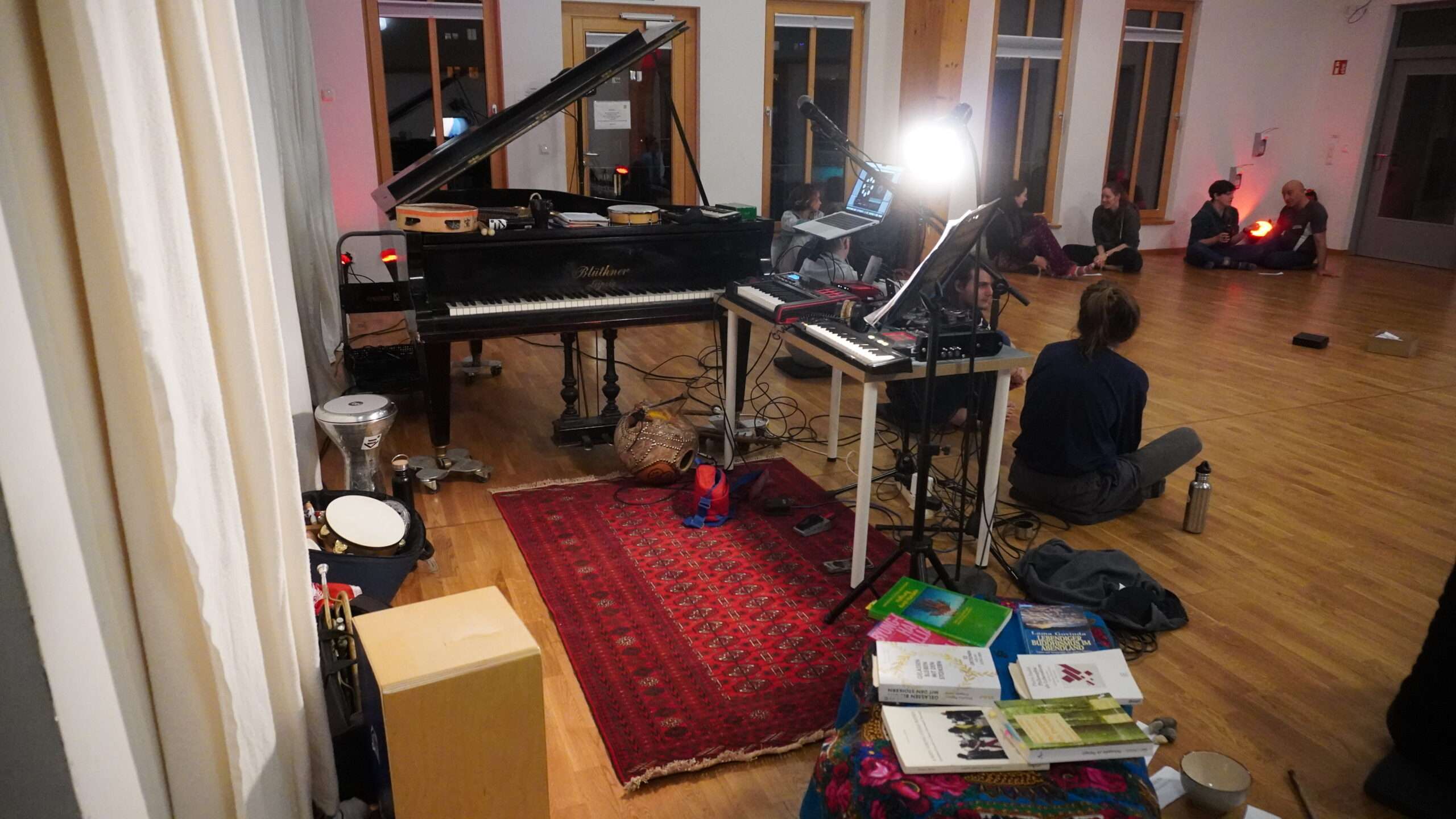
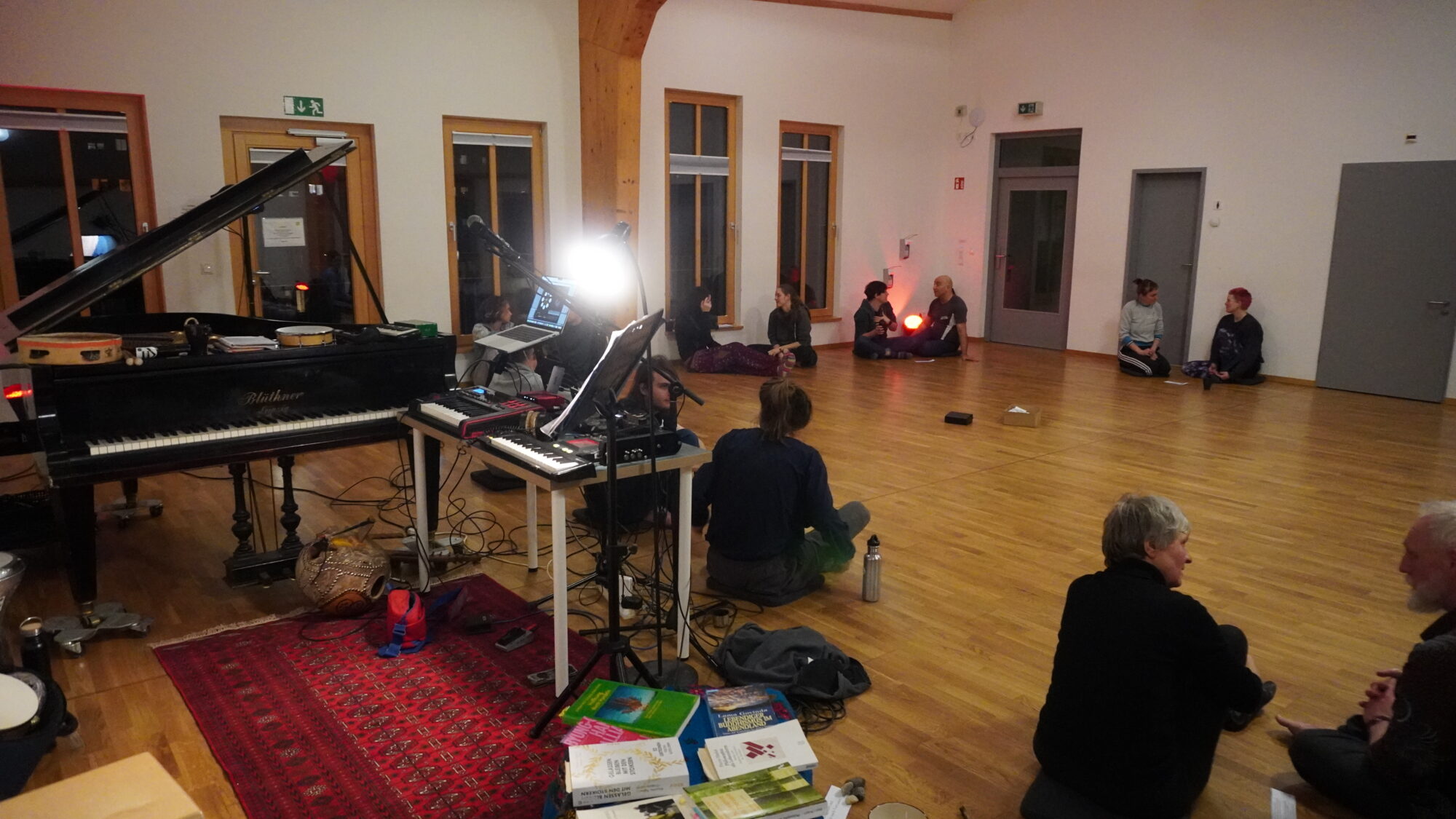
Instruments used in Re_Connection sessions
How the Practice Works
Embodied Exploration
The practice begins with non-verbal group activation and bodywork, inspired by dance and movement therapy. Through breath, spatial awareness and simple movement qualities, participants develop sensitivity to bodily states, emotional resonance and relational dynamics. The focus lies on attentive noticing — without artistic or athletic expectation.
Reflection & Dialogue
The second phase works with philosophical impulses and social questions. Participants learn how emotions and social realities interact. Formats include dyadic conversations, various exercises drawing on „The Work that Reconnects“ (Joanna Macy), and short written reflections. The process is open-ended and aims at mutual attentiveness rather than consensus.
Movement & Integration
In the final phase, verbal and non-verbal elements merge into collective movement and sound. Live music provides a temporal structure that supports transitions between individual and collective experience. In the non-verbal space, resonance, orientation and shared dynamics emerge — beyond words and self-presentation.
The Team
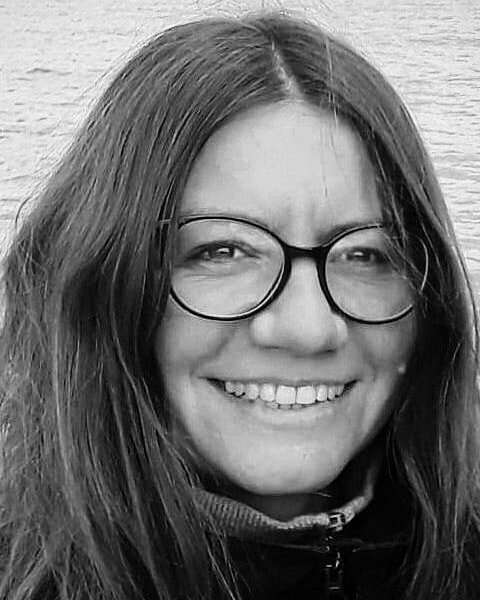
Susanne Gärtner
Sustainable Activism
Susanne works at the intersection of cultural studies, social pedagogy and political education. Her focus includes group-based misanthropy, racism, remembrance work, participation and sustainable activism. With long-standing experience in moderating group processes, she brings a grounded approach to dialogue and inquiry.
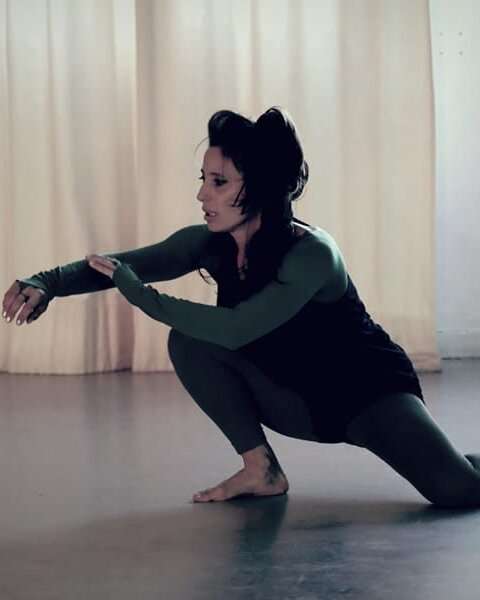
Carolina Márquez
Dance Therapy & Psychology
Carolina is a professional dancer, psychologist and movement therapist. Her work combines body awareness, expression and trauma-sensitive facilitation. Participants experience body-based encounters that open new perceptual and expressive possibilities.
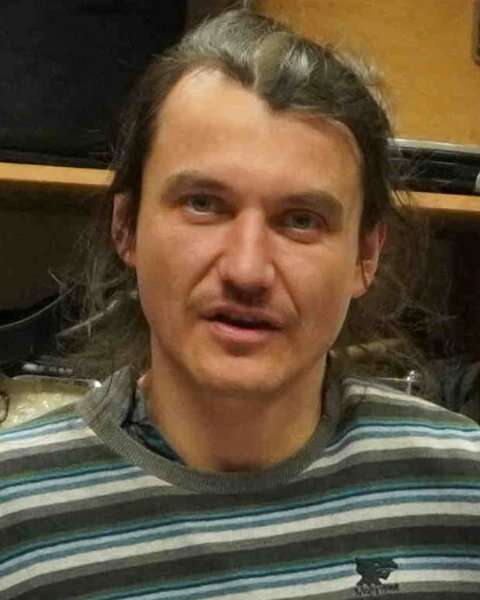
Arystan Petzold
Music & Ritual Practice
Arystan is a multi-instrumentalist, composer and music educator with long-standing research and practice at the intersection of music, improvisation and ritual. Working with instruments from different traditions, voice and live looping, he shapes the musical framework of Re_Connection.
Context & Development
Re_Connection emerged from a pilot phase in 2024 and has since been implemented with support from the German Federal Agency for Civic Education (Bundeszentrale für politische Bildung) at riesa efau. Kultur Forum Dresden.
The format continues to develop — through regular practice sessions, multi-day retreats and ongoing exchange with participants. Insights from previous iterations feed into its ongoing evolution. We are currently exploring how the approach might be developed further — potentially as a broader research and practice project combining theory, method development, and community work.
Formats
Monthly Sessions
A recurring format for groups that want to explore Re_Connection as a regular practice.
Workshops for Institutions
Sessions for cultural organisations, educational institutions and civic initiatives.
Festival & Conference Modules
Shorter formats for gatherings that address cultural, social or political questions.
Residencies & Extended Formats
Longer engagements for deeper inquiry, artistic research and process-oriented development.
Foundations & Influences
Re_Connection draws on approaches from several fields:
- Somatic and movement-based approaches from dance therapy and body psychology
- Dialogical and reflective methods from transformative education
- Ecological and relational perspectives on interdependence and orientation in times of crisis
- Ritual, music and temporal structuring from artistic practice and improvisation
Contact & Collaboration
For workshop requests, institutional collaborations or programme development, please get in touch:
info@arystan.de → Request a Workshop