Music education & creative music projects
Music projects for schools, youth centres and adults
Music as an experiential space for expression, community and self-efficacy
For more than 15 years I have developed music workshops that connect people through rhythm, voice and collective creativity, including programmes for schools, youth centres and adult groups in Germany, Italy and Spain.
In these workshops, music emerges through listening, trying things out, expression, flow and spontaneity, supported by a clear framework and shared rules of collaboration.
Fields of Work
Working method
How I Work
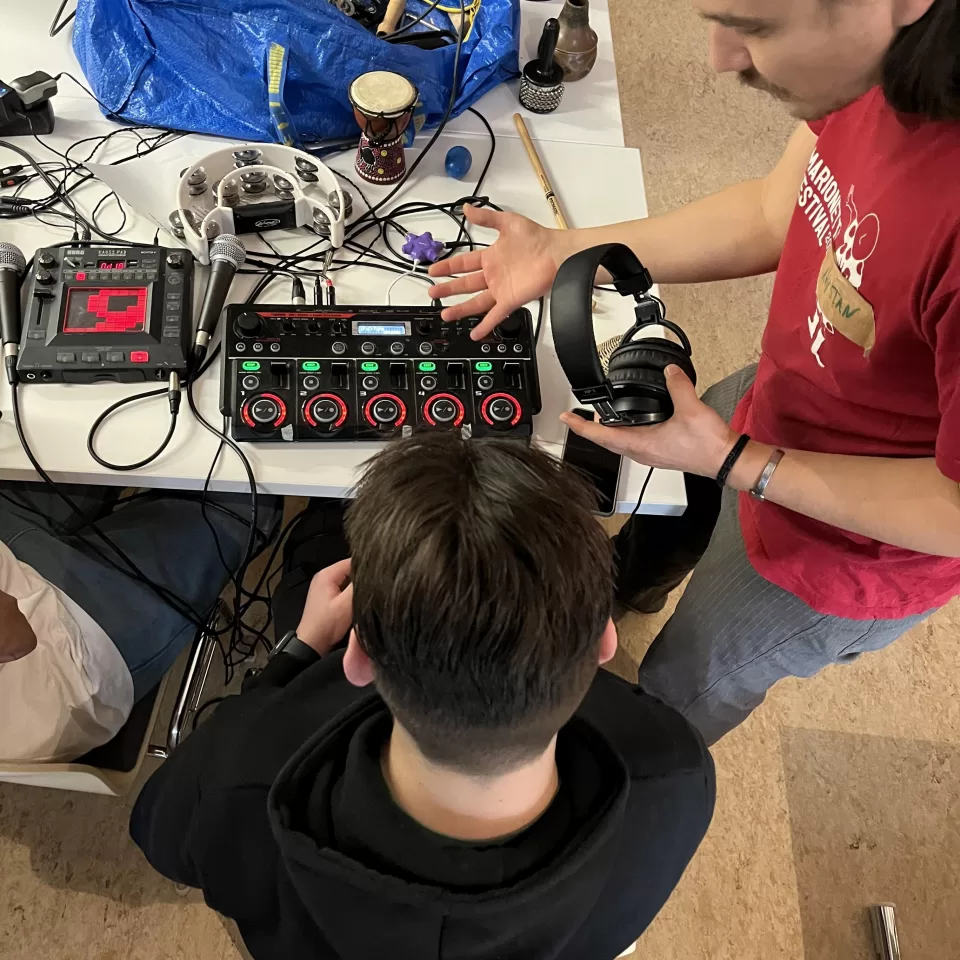
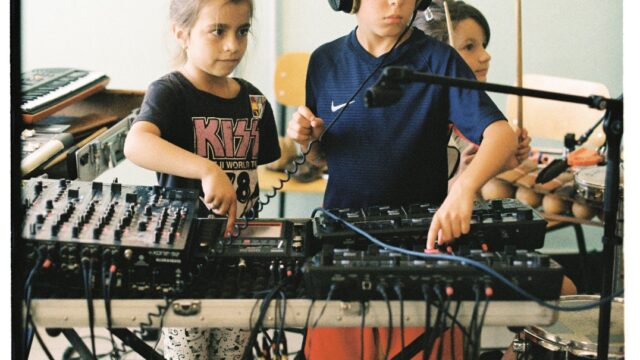
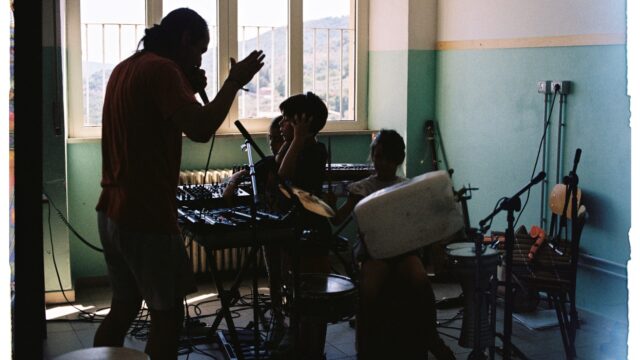
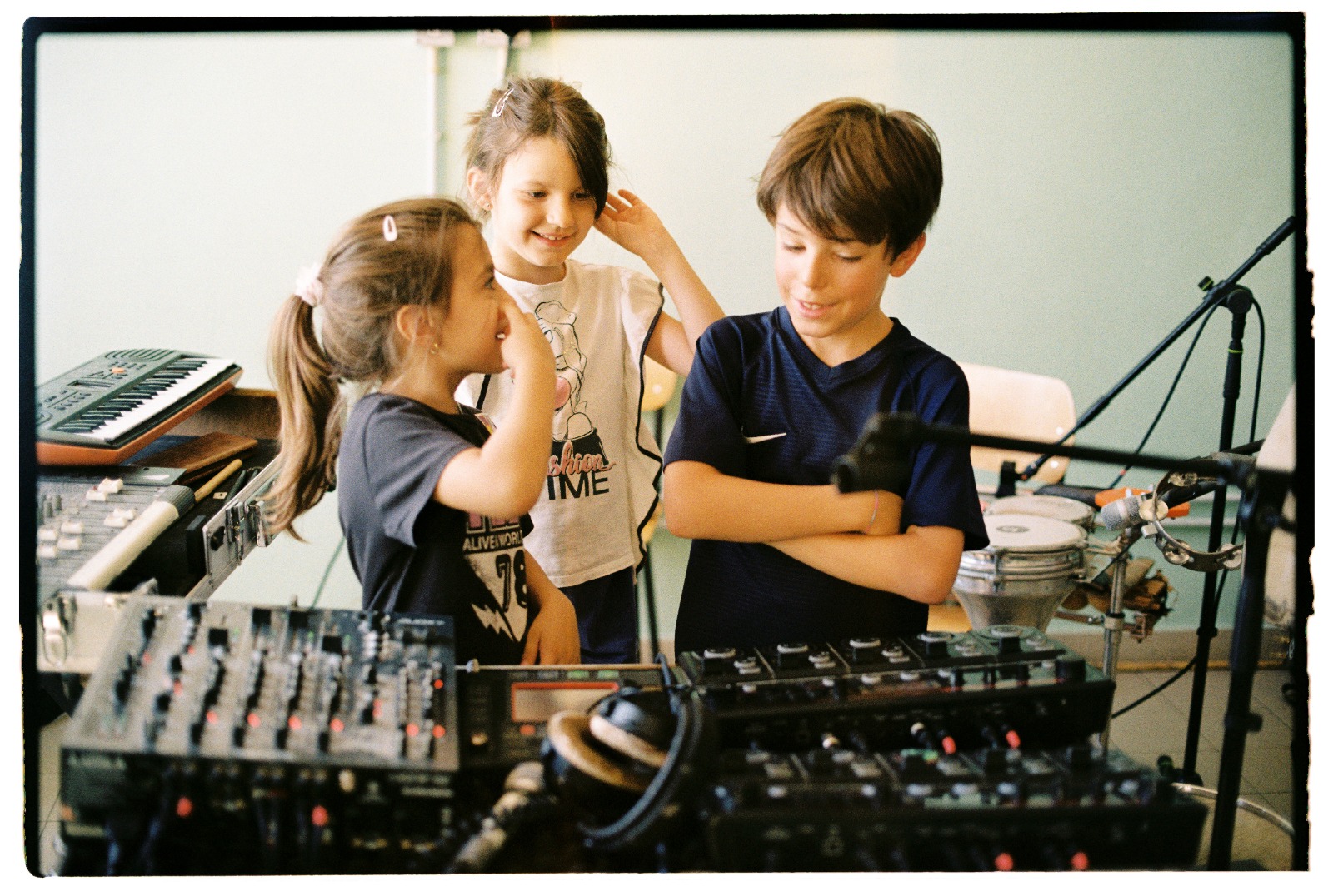
I understand workshops as experiential spaces. Participants should be able to encounter musical means, try them out and bring them into their own form of expression. It is about rhythm, voice, language, body, technology and ensemble work, not as abstract content but as tools with which something of their own can emerge.
Clichés can also be material. You may know them, use them, exaggerate them and leave them again. Only when you recognise codes can you change them. This often opens a transversal space in which music, language, body, technology, history and everyday life connect, with small narratives, cross-connections, curiosity and room to try things out.
What matters to me is a balance between individuality and collectivity. Individual voices should become visible, especially the quieter and more reserved ones. The room should not only be shaped by those who speak or show themselves immediately.
I first take children, young people and adults as they are, without prejudging them and without wagging a finger. The roles are not artificially blurred: I lead the process and bring in experience, structure and professional guidance. At the same time, I take the participants seriously. They should be able to voice opinions, express criticism and develop their own forms of expression, a language that makes them freer and also moves the group forward. They should be able to take charge of and shape their creative process; I support them in developing their ideas.
Transcultural perspective
Growing up in eastern Germany with Vogtland, Russian and Kazakh roots, while Italian and Spanish later became lived realities, made me familiar with the question: what am I, actually? For me, multiple belonging is not a deficit. You can move between languages, roles and cultural codes, with the emotional quality of one language, the humour of another or the clarity of another system. This in-between does not have to create shame; it can enable mobility, expression and freedom.
What I Offer
It starts with a beat, a word, an idea. It ends with a piece that didn’t exist before – and a group that knows it built it themselves.
Formate
Modules
All modules can be freely combined depending on age, time and interest.
Teamprojekte
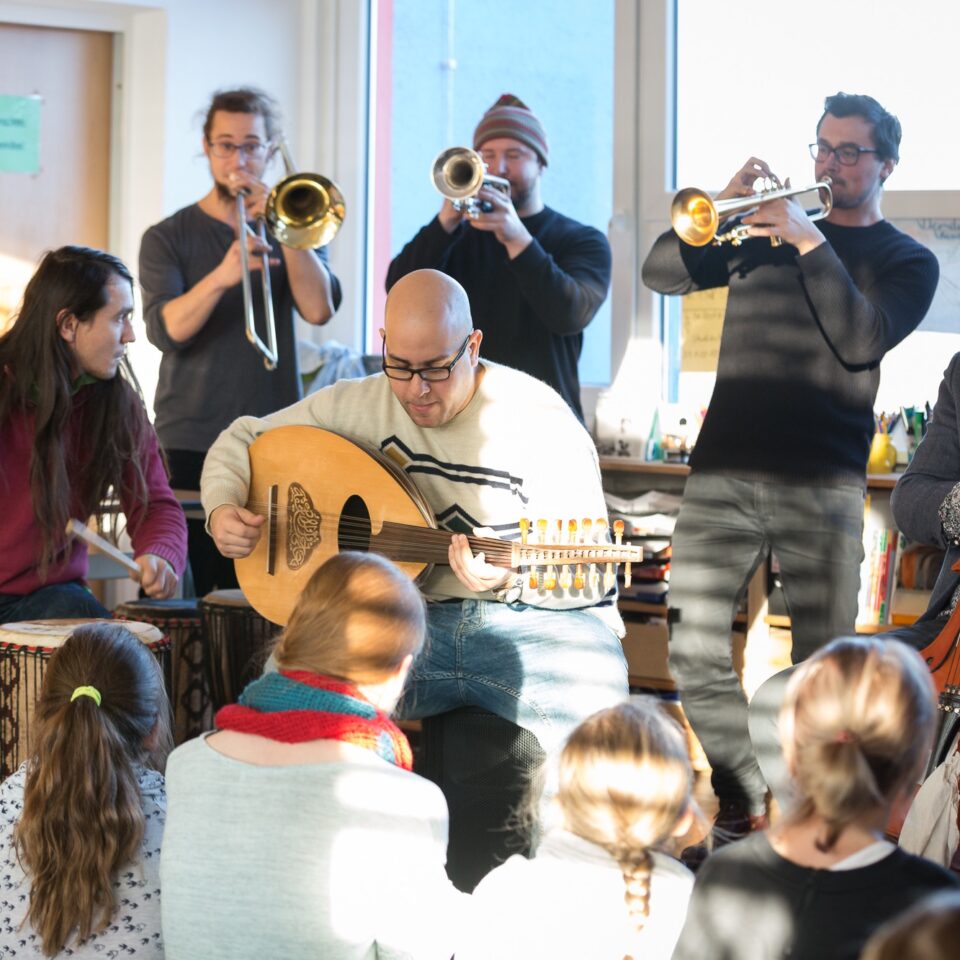
For larger groups (40–120 participants), I assemble a team depending on the project, with musicians, dancers and theatre or circus educators. In one-day workshops, groups rotate through different stations; in multi-day projects, they work in fixed module groups.
What Is Needed On Site
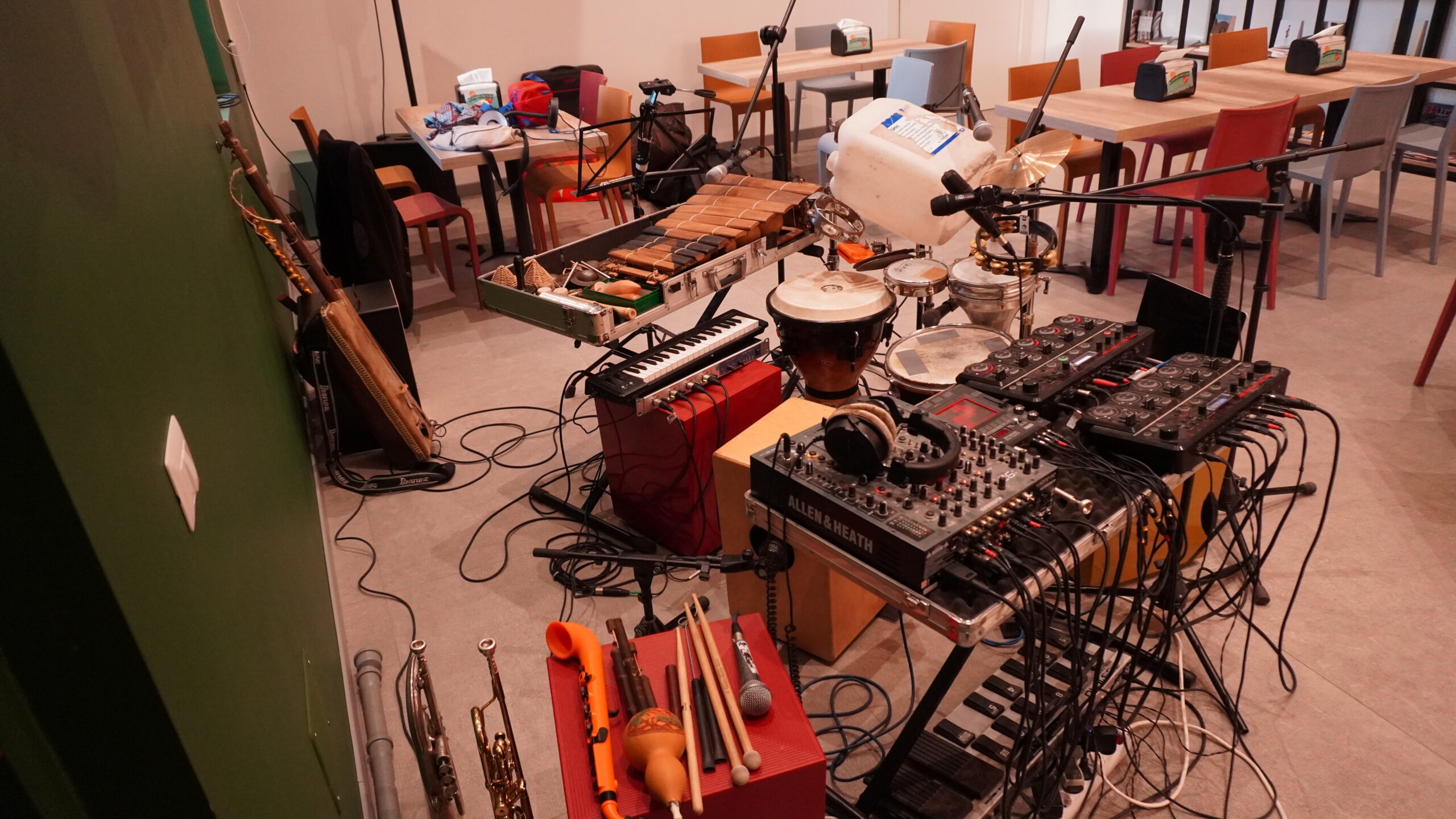
- ✓ A room (ideally a music room); existing materials can be used together
- ✓ Amplifier, if available; otherwise I bring one
- ✓ On request I can advise on buying equipment (e.g. DJ console)
Experience & Approach
Experience
Over 15 years in music education. More than 150 workshops, 20 project weeks and 10 creative camps.
Approach
Embodied learning meets transcultural perspectives. Rhythm, voice and movement connect with global traditions.
Network
Professional network of musicians, dancers and theatre and circus educators for projects with 40–120 participants.
Background
Jazz trumpet and music education (HfM Dresden, diploma 2011). Ethnomusicological research into music and ritual in Morocco. Artistic work as a multi-instrumentalist, live-looping performer and composer for theatre and performance productions. Member of Banda Comunale Dresden since 2006.
Fees on request
Final costs depend on duration, group size, travel, materials, technical setup and institutional context. I am happy to prepare a tailored proposal for schools, cultural institutions and project partners.
Funding possibilities: GTA funds, school support associations, cultural funding, small-project funding
Process – how it works
Planning a workshop or music project is straightforward. Together we define the structure according to your goals, group size and available time.
First Contact
Share dates, group size and workshop type
Concept proposal
A suitable format for your context
Planning
Clarify logistics, materials and financing
Delivery
On-site workshops or team coordination
Follow-up
Presentation and possible further collaboration